Gender in Resilience

A few weeks ago (yes that’s how long it has been), I gave a talk on ways in which disaster management and recovery projects – and indeed all resilience efforts – can better integrate gender. Many of us in the development community struggle to incorporate meaningful gender actions while planning for resilience because they focus on the “disaster”. The trick is to think and plan for “normal” and take into consideration existing gender norms and intersectionality. For those grappling with mainstreaming gender in resilience initiatives and struggling to explain why the additional gender lens will make communities more secure and, in the event of a calamity, recover faster and better, here are my four top tips:
Focus on livelihoods: Many governments and communities have disaster preparedness and resilience right at the bottom of their priority. This is unsurprising because there is just so much they have to contend with – jobs, basic civic amenities, employment, livelihoods. Who has the bandwidth to focus on disaster preparedness? Even the COVID-19 pandemic has not really altered priorities. The focus is still on meeting daily needs. So as a practitioner or an organisation hoping to get resilience on the agenda: focus on livelihoods. Work with the community on a plan to enhance livelihoods (giving women a greater share in the economy), or identify alternative sources of livelihood and income (this too, can only be done if women participate because: will men do two jobs?). People get livelihoods, and the opportunity to earn more money and improve lifestyle is always attractive. Together with livelihoods, build on investments and financial literacy – these initiatives are universally relevant and help in introducing conversations around resilience and disaster preparedness.
Introduce life-saving skills: Since almost all development practitioners focus on skill-building, let’s look at introducing life-saving skills that stand in the face of a natural calamity. Build resilience by teaching communities (men, women, kids) to swim, climb (especially useful for mountain communities), drive, fix and repair machinery, such as generators and turbines, plumbing, first-aid… Women show more interest in acquiring these skills and having more people in the community competent in these skills enhances the community’s security overall. SwimSafe imparts swimming and water-related skills in Bangladesh, a country that experiences frequent cyclonic storms and is at increased risk of flooding as temperatures rise due to global warming. Ensure quality and standards when you introduce these critical life-saving skills. Have certified trainers impart these skills, encourage competition, provide certificates. Make sure that these skills are refreshed and utilised else they are soon forgotten.
Engage young people: If you can’t engage women directly, reach out to young people, especially young girls. Teach them self-defence (this is very popular) or identify a sport that appeals to them (racquet and football clubs are very popular in the Asian context). These skills help build strength and self-confidence and over time, they build ownership among older members of the community.
Fun fact: I employed this tactic to get my dad into yoga – he was initially hesitant, but my regular practice piqued his interest, and the rest is history.
Bring in the experts: All efforts at mainstreaming gender must include awareness and understanding of the risks of gender based violence and how these risks increase in the event of a natural or man-made disaster. Do not ignore this aspect while planning and preparing a resilient community. Help the community understand risks of trafficking, for example. Help women and children identify vulnerabilities and risks to their bodies. Help them identify predators. Identify existing triggers that may increase vulnerabilities (alcoholism, unemployment, large-scale male migration, indebtedness). And if you or your organisation cannot do this, bring in experts with knowledge and experience who can explain, train, and help shift behaviours.
In fact, whenever you are in doubt, do not hesitate to ask for help!
Good luck – may our communities always be resilient!
Omicron
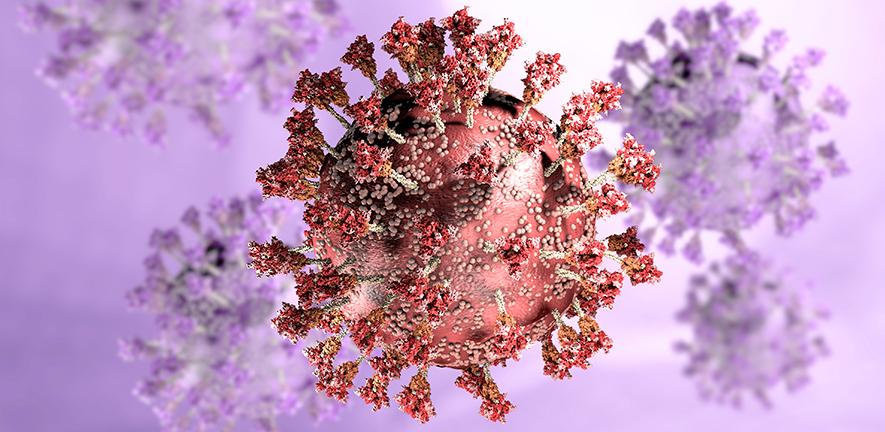
Last Thursday, our daughter K came home with a runny nose. I thought of testing her for covid but put it off. As the evening progressed, she developed high temperature and climbed into our bed for comfort. On Friday morning, she tested positive. Protected by three Pfizer shots, we were negative. We chose to isolate. It would only be a matter of time that prolonged exposure to the highly virulent Omicron would render us positive. We just needed to make sure we were well stocked for a week. Luckily, all of that is possible in 2022.
We spent the next ten minutes informing close contacts. For O and me, it was just the nanny from the night before. All our work is online and we just meet our bubble every Sunday for pizza. We hadn’t seen her in a week. For K, it was school and a whole bunch of extracurricular groups. Omicron has been raging among these unvaccinated kids groups and infiltrating families. Messages asking people to test and isolate went out almost as soon as we informed our groups. K slept almost the entire day, waking up for nutrition, puffy and bedraggled when she did. When she coughed which fortunately wasn’t often, she sounded like a barking dog. O and I worked and felt energetic enough to cook, clean, and ventilate the apartment. I wore a mask most of the time.
Saturday was different. We continued to test negative but I woke feeling strange. I don’t know how else to describe it – my right eyelid had inexplicably swollen. I found no stye or insect bite. The lymph nodes on my neck were inflamed and I had sore muscles that had never ached before. O felt no better. We looked like wounded warriors. Our bodies are fighting, I thought, making my way crablike through what suddenly seemed to be an infinitely vast apartment. K laughed as I read her stories and entertained her with my mask on.
We tested positive on Sunday. By then, K was recovering and even though she hadn’t tested negative, her energy was certainly back. She was no longer barking, oops… coughing. Whoever said Omicron was mild, certainly had a very high threshold for severe.
We were worse on Monday. I messaged colleagues asking them to step in for me while O canceled the appointments in his diary. K bounced all over the apartment, turning every room into a baby gym. I turned the corner on Tuesday. All this time, I had slightly elevated temperature. On Tuesday, it was back to normal. I felt energetic enough to sit through my packed schedule. O who never had temperature, tested and found himself positive. We concluded it would take longer for the infection to pass. Meanwhile, the results for the covid-19 serological study that I am participating in, landed in my inbox. Barely a week had passed since I gave my sample. My body was swimming in vaccine induced antibodies, I was informed. Until Omicron struck, grumbled O. Luckily, we never lost our sense of smell or taste.
On Thursday, two and a half days after I had no symptoms, I decided to test. I was negative. Unfortunately, not O and K – shows the difference between vaccinated and unvaccinated individuals (and the important age factor in fighting disease). Boosted with natural immunity, I marched off to the park for a walk, an unusual spring in my step.
It took a full seven days for O to finally test negative. Each day being sick set him back mentally. He felt exhausted in the knowledge that he was still positive. Yet, it was he who kept the household running, planning and cooking meals and snacks. When I tested negative, he was desperate to get better and take that walk in the park with me. Now that he has, we are off to enjoy the sun.
But before we go, here’s a deep bow to science that produced covid-19 vaccines in such a short time. Immunity and recovery is personal BUT there is no doubt that it was vaccination that took only a week off our lives. So please trust science and do not believe omicron to be mild. It isn’t. Don’t go out there seeking it; if you haven’t caught it so far, consider yourself very, very lucky. Stay safe.
the backlog of this new year
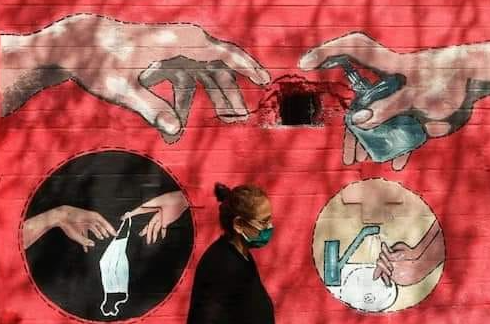
Half of January is gone and I am terribly behind with all the promises I made to myself. Most of these are half baked and poorly articulated so it is easy to get around them if the flesh is weak. But what I have stuck to fervently, is the promise of dry January. That promise will be temporarily on hold for a few hours this evening, when I have intended to treat myself to just one drink to celebrate a billion covid-19 doses reaching 144 countries in the world, but that I feel is worth it…
So here’s the reason for the backlog:
2022 feels just the same as 2021.
2020 was special. 2021 was taxing, tiring, turbulent, terrifying. As 2021 closed, we looked around to see how many of us survived. We stopped counting our scars. Instead, we just felt grateful we still had one another despite everything. Some of us got a few vaccines shot into our arms. Some continued to remain sceptical. But all of us felt its harsh impact. 2022 feels like its 2021 on repeat or even a sequel. Do these end with a trilogy? I certainly hope so!
The WHO has said that the acute phase of the pandemic will be over by August – September of this year. That is eight long months. And this depends on how quickly we vaccinate people who have never received a single dose or those who are still waiting for their second. Another backlog… Fun fact: a few days after Mike Ryan of WHO made this statement, it was attributed to eminent epidemiologist, Bill Gates!
But I guess the biggest backlog is being able to meet family and friends in person. Not e-meet. No Zoom or WhatsApp calls. It feels awful to put it off month after month, year after year, and live in fear a thousand miles away and hope that precautionary doses keep them safe. My little niece in Australia got her first shot this morning, a friend and her two year old in Switzerland tested positive for COVID; and people in my fair motherland have taken their annual dip in the holy Ganges on Makar Sankranti.
We don’t need to just catch up but ALSO get ahead of the virus… so many people still need protection and we seem to revert to pre-covid behaviours so quickly, as if the experiences of the past have no bearing.
So here’s my modest wish list (note: not a resolution) for 2022:
- Showing my daughter that all the people and places I talk about really exist
- Telling more stories and writing them down for an audience that cares
- Doing my bit to end the pandemic
Being kind to conspiracy theorists- Stay masked,
live like a hermit - Improving my golf
- Cook better,
encourage my daughter to experiment with spicy food - Walking and hiking more – all of which were achievable pre-pandemic goals
- Catch up on all the Netflix backlog
- Reduce the reading pile on my night stand
Doing less social mediawho am I kidding?
And as for dry January – I’ll try and let that spill to February unless I get fed up sooner!
Here’s to a better 2022, fingers crossed.
Opportunity?
In my last blog, I ranted about how my generation wasn’t quite keeping up and how we wanted to solve today’s problems using yesterday’s solutions, our eyes firmly shut as we live in denial about structural inequalities, offering cutesy cosmetic explanations when we are expected to be bold. To use an allegory, why should one spend enormous resources trying to prop up a tower destined for collapse instead of building one with solid foundations?
Yes, I haven’t ended my rant and I don’t think anyone is listening either…
Thing is, the pandemic isn’t over. Europe is in the throes of a terrible fifth wave (frankly, I stopped counting). And yet again, it is because of MY generation, eligible but unwilling to get vaccinated putting at risk young kids (like my daughter) who are still not eligible to be vaccinated. So yes, we continue to disappoint our kids and wreck their opportunity of making a success out of their future. Which, by the way, is what we did at COP26.
I didn’t really want to allude to COP26 that was already doomed to fail before it began, but we seem to shine at running our meagre opportunities to waste.
Which brings me to the title of this blog.
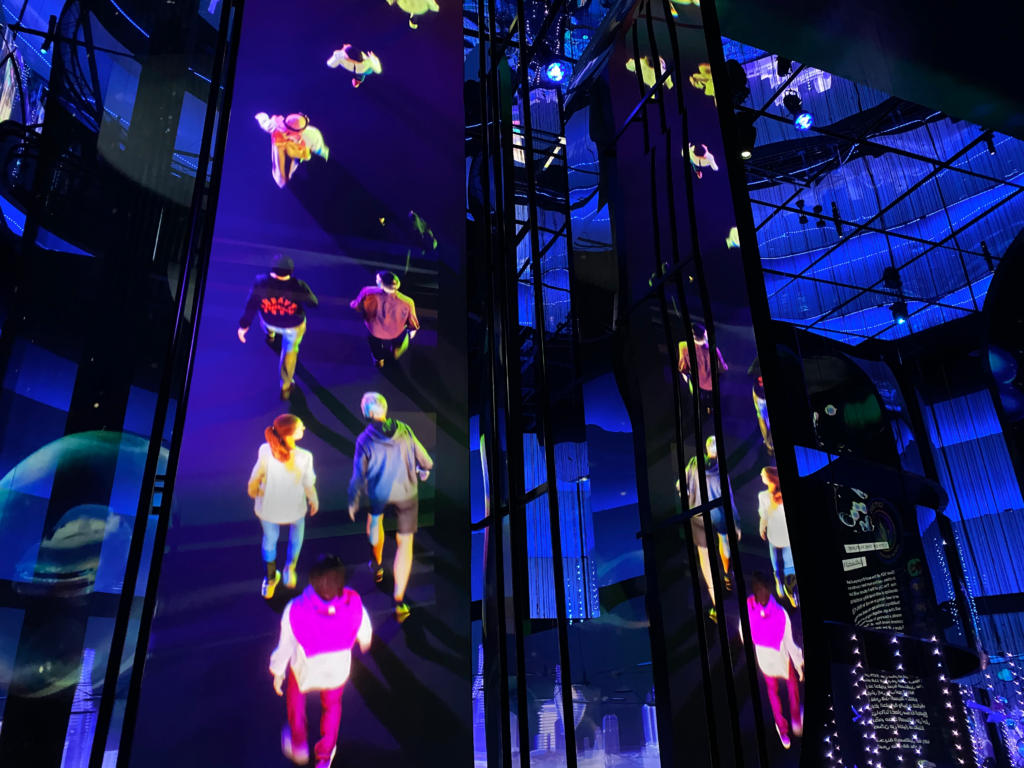
A few weeks ago, I visited Expo 2020 at Dubai. It was my first transcontinental trip in over 20 months so everything seemed new and exciting. I felt like a kid in a candy store browsing the entertainment offerings on Emirates and I spoke needlessly loud (with my headphones, naturally) when the air hostess came with food and drinks. So imagine how revved up I was when we arrived (on Dubai metro) at the Expo grounds. I nearly passed out when an army of orange robots came to greet us at the entrance. One of them even masqueraded as fashion police asking us to stay masked! All of that only heightened my expectations as we visited in the suggested sequence, the pavilions showcasing Mobility, Sustainability, Opportunity.
The first two pavilions, were fun, innovative, and futuristic. AI and psychedelia were big in both, harnessing intelligence to move populations through countries and for inter-galactic travel as well as building the future of a sustainable (neon blue and purple) planet. In fact, what impressed me about the sustainability part was that it laid bare the stark choices before us if we fail to act (now). For example, there were choices one could make between preserving a rainforest or cleaning up the ocean or between giving up meat entirely or not seeing a forest ever, and so on. Every choice you make, makes you realise how close we are to the point when there is no choice at all.
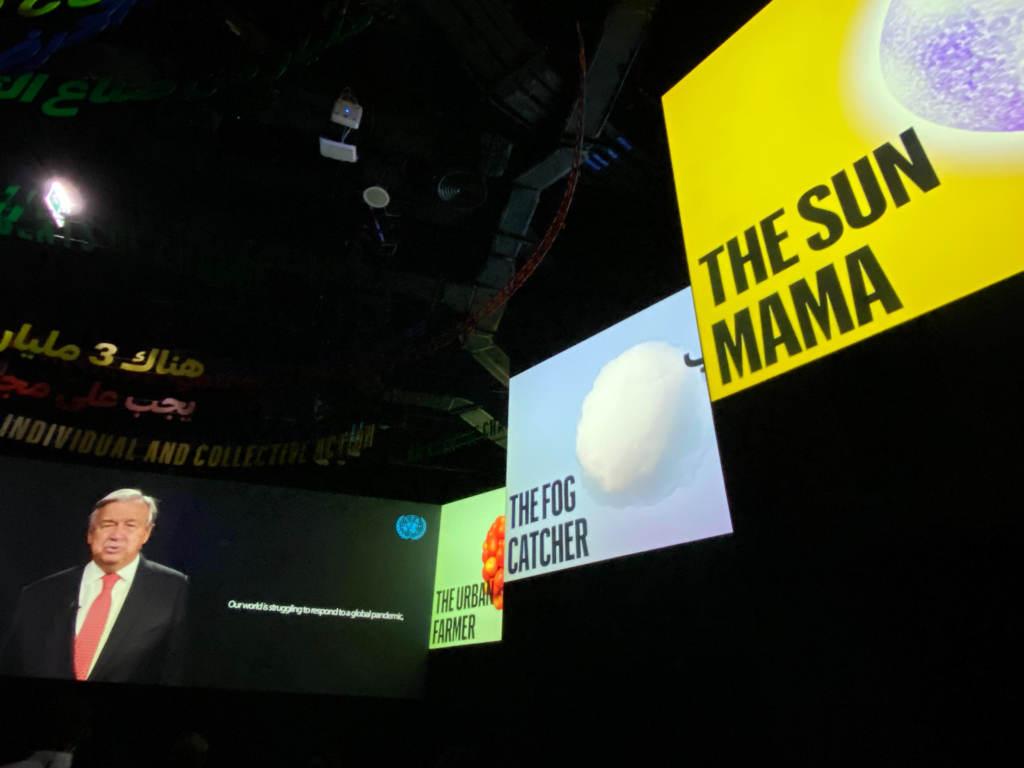
With that, we moved to Opportunity. This pavilion was curated by the UN so our expectations were a little low. It is easy to be hard on yourself when you have been part of a system…
We wound our way through a make believe serpentine (as there was no queue, just a serpentine pathway) and entered the halls to a speech by António Guterres where he talked about how there were so many opportunities for people to better their lives (I think) but they had carefully selected three that we were about to see.
Of the three lives, I picked The Sun Mama that follows a woman in Zanzibar who after training at the Barefoot College in Rajasthan (India) teaches women in her Governorate to harness solar energy. Women in remote rural areas go about installing solar panels and electrifying their homes and villages. They earn a steady income and their kids (especially girls) go to school and study late at night after helping their mothers with household chores. Some women also work (as tailors) and supplement family incomes. Transformational.
When I was typing the previous paragraph, I felt like the rookie UN JPO I was 20 years ago, preparing a brochure for a small-scale renewable energy project. And that is the problem with the previous paragraph and the Opportunity pavilion.
It is so last century.
If we are moving at such gobsmacking speed that our planet is a village and Mars the nearest suburb, how does an opportunity in solar electrification make kids in Zanzibar head to Planet B? (Not that I want them to). Social and economic inequalities scream so loud through those examples that one seriously worries that those who lead the UN are tone deaf and out of touch. Or, as always, they are far too scared to address the elephant in the room – that none of the SDGs address obscene levels of wealth that disproportionately snatch all opportunities for the rich. On that note, Elon Musk indulged his fancies through the security of a family-owned emerald mine and his fellow spaceman, Jeff Bezos had friends and family invest generously to make Amazon the success it became.
Thing is, the Dubai Expo could have just showcased opportunities for the haves and conned the audience into believing that the other half did not exist or (even better) just forced us to swallow the bitter pill that our opportunities are in fact determined by our wealth. But then the UN came along and curated a show that presents solutions that address JUST one facet of poverty. For centuries, the world has lived with and accepted deep structural inequalities that seem to only get exacerbated (despite the UN). And instead of boldly finding solutions that encourage populations to dream the same way as Elon Musk, it is more comforting to keep people where they are and offer them small doses of what we enjoy boundlessly: energy, mobility, wealth, information… keep propping up the faulty tower…
It is way more comforting to ignore poverty’s twin: inequality.
So, unless we address social and economic inequalities, there isn’t a single serious opportunity coming our way. About time we stopped believing in that fable.
Rant over. For now.
The fault of our generation

Last week, I was invited to participate in a panel on Gender the Youth SDG Summit, UNITE2030. Totally up my street, I thought, as I scribbled my key messages: post 2030, its time for gender equality to be the norm… let’s broaden the narrow focus of gender in SDG 5 to include LGBTIAQ+… this, I can do in my sleep, I thought cockily. What else? Young people are incredible advocates and activists, but it is time to move from activism to influencing policy, so how about making that shift, being part of the democratic process and changing the system from within? Agitate to increase women’s representation in local bodies and parliaments if you want the laws you are proud of… All good messages, I thought as I tuned into the inaugural session.
We got started with a performance by AY Young – who was so supercharged that the inaugural panel of VERY senior executives (Henrietta Fore and David Nabarro, for example) had to keep the tempo up, somehow. I winced as I saw them struggle to un-shop their talk, un-jargon the development lingo and just tell it like it is. I saw the panel struggling to respond to very straightforward questions. There was no government to appease, no donor to persuade. I guess that is what made communication such a challenge. And then came the clincher of a question:
What is the one thing you’d tell your younger self to do or not do?
I thought of what I’d say if this were put to me. Probably not open my mouth and say the first thing that comes to my head… yes, definitely that…
I turned my attention to the Panel. “Be less afraid” said one, “take more risks,” said another. “You would have achieved more had you not been so afraid,” “don’t be too shy…” or “I was so unsure of how things would turn out…”
Fear and not taking risks is certainly not something I can relate to, but this made me realise the fault of my generation: collusion.
Every generation has a one-time opportunity to turn the tide in their favour; to determine the narrative that will shape the future. Just as we watch kids striking school unless leaders do more for the environment, ask the tough questions, and force us to act. We did nothing of the kind. We were not fully believing of the climate crisis and very iffy on gender, diversity, and inclusion. We thought fighting poverty and inequality was chasing a communist utopia. And so, we were easily blackmailed into sacrificing our intuition at the altar of consumerism. It is my generation that bought the fuel guzzling cars and holidayed in exotic locales. It was also my generation that regressed on gender and did little to make work and other public places safe. We lived in comfortable denial of caste, race, and we normalised discriminatory behaviour. We colluded with the generation before us and we missed our opportunity to make a difference and become real role models. We could have handed a much better planet to the youth.
And now we sit on panels and preach.
Little do we realise that we need to make way and listen. What did I learn from the youth? The top ten issues that concern them are around the environment, climate change, and sustainability. Gender, inclusion, LGBTIAQ+ come next. I didn’t hear much about jobs, but I think that’s because they don’t expect our generation to give them any. I also think they think we are far too jaded to provide anything more meaningful than the advice they won’t use. We should feel grateful they give us the floor in the first place.
They do respect institutions – which explains the SDG summit. And they believe in multilateralism in a more holistic, egalitarian way: as encompassing and allowing expression from the global south. There are no vaccine sceptics there and no proponents of war. They are committed to education, sport, and (lifelong) learning. They have female and trans role models. So what’s keeping them from shaping a better agenda? Us. And it’s time for that to change.
And so I told them that (like everything else) gender relations are all about sharing power. Power, that is so addictive that it is hard to concede…
Afghanistan – since I had to…

I volunteered to work for the polio programme in Afghanistan in 2008, fresh from my first international assignment in Nigeria. It was only in 2010 that this materialised. I spent half a year with UNICEF working on eradicating polio, a job that came quite naturally to me since I wrote my book, but nothing had prepared me for the complexities that came with working in a country that had only known conflict. At the end of six months, I was weary and weatherbeaten. But Afghanistan was a drug that was hard to shake. So I returned.
This time, I transitioned from polio (and public health) to regional integration and from UNICEF to the World Bank. And since bringing women together was considered to be a way to harness South Asia’s soft power, I recast myself as a gender and development expert.
Not much had changed between my two assignments. The city looked much the same – dusty and busy with endless traffic jams during the week. Afghans picnicked a lot – parks and woodlands were flooded with families tucking into fragrant, steaming pulav and kebabs on weekends. There was one noticeable difference – there were fewer ISAF vehicles patrolling the city. Consequently, the network was better. Shaken by frequent attacks, the UN stayed in their fortified compounds, one of which had provided me refuge in a 20 foot container, and continued to do their daily radio checks and security drills. On each of my missions, I got a mandatory security briefing and was handed safety gear – a kevlar vest, helmet, radio, and a really basic Nokia phone.
Luckily, I was working on seven other South Asian countries, so this feeling of captivity was temporary. Also, I knew how to get around…
In many ways, the regional integration assignment was far more exciting than the persistent polio eradication task. Harnessing (women’s) soft power meant I could look at all kinds of cultural activities that provided women and girls with employment. So I met pop stars and fashion designers and discovered that (with the exception of security considerations) their life was no different from their contemporaries in India or Nepal. They battled the same deadlines and creative blocks. They worked through the night and passed out in the morning. They forgot to shop. They forgot to eat. They reminded me SO MUCH of my friends back home.
There were also bloggers, coders, and girls discovering technology. Girls who found the internet to escape to a world that was free. Girls with stars in their eyes who were daring to nurture big dreams. That was the new Afghanistan.
And then there were official government projects aimed at empowering women. Those that focused on boosting rural livelihoods and entrepreneurship. Those that got donor funding and approval. Like groups of women getting together to make potato chips and supplying them to kids in a local school. Yes, potato chips to school kids. Never mind long term health implications. Or countless female tailors giving each other competition in a recently electrified village. I could never understand why tailoring was considered to be such a profitable skill. Useful and practical, yes. But profitable?
Most of these projects were managed through the Ministry of Rural Reconstruction and Development. World Bank funding had ensured a youthful buzz and dynamic leadership. Unlike many other ministries, things seemed to magically (and efficiently) get done. So when we moaned about the need for a gender expert in project teams, I was proudly informed that the position had been filled.
Who is the gender expert? I asked during a follow up meeting with the team. A youngish man with a flowing beard smiled: I am.
I drove back bewildered and unable to fully comprehend why a gender role in a male-dominated society would also fall on a man. There was such dichotomy in the two worlds in Afghanistan – the young, dynamic, progressive rapidly urbanising country where young girls had aspirations and the traditional, conservative, mostly rural one that struggled to give space to their female population. Somewhere, the two had to engage.
The Ministry of Women’s Affairs straddled the two worlds. Or attempted to. Visiting them in their fortified compound was like entering a desert oasis with manicured, rose scented gardens and bubbling fountains. Women workshopped and learned different skills – tailoring (but of course), embroidery (why not), knitting (it’s all connected, and this keeps you warm), food processing, pickle and jam making (no potato chips). But there was more. There were brightly lit classrooms where girls were trained to market their products. A mini-MBA module inspired by the countless marketing courses for home entrepreneurs taught them the importance of costing their products right, factoring in their labour costs, and calculating, as accurately as they could, the time they spent in production. They learnt how to understand their market and showed me results of the market surveys they had conducted in their neighbourhoods.
Did they feel equipped to go out there and sell? Oh yes. The Ministry also had little shops where a little bazaar selling women’s produce flourished. That was certainly an option.
In many ways, Afghanistan was no different from India. Women felt safe in artificial bubbles. Everywhere else was bad-land.
Even though all projects through different ministries aimed at economic empowerment, none dared to question (forget addressing or raising awareness) entrenched gender roles and masculinity. Once women get their hands on money, they will automatically gain respect, I was told. Except I don’t think many women got their hands on much money. Profits were almost always reinvested, and those who did save, ended up buying a ticket to the United States. The woman supplying potato chips to the school was one of them. She chose not to conquer the markets of the Central Highlands but to abandon her workshop and (project funded) chip making machinery for greener pastures. She also left way before the coders and techno-geeks who clung to their vision of Afghanistan until the very end. The oasis that was the Ministry of Women’s Affairs got shut down and then sported a new signboard: Ministry for the Promotion of Virtue and the Prevention of Vice. Another oasis, I am guessing. But, just not for women.
I haven’t returned since November 2013. Since I lost my neighbour and a colleague in the same attack in January 2014. The drug kinda wore off.


Spot the Token Jerk in your video calls

It has been a year and over a thousand video calls on countless platforms. When I am not jumping in and out of calls – mostly professional, I am either attending a webinar or participating in one. Or I am in my online French lessons. Whenever a video call involves more than four – OK, let’s say, five persons, you are sure to encounter the token jerk (TJ). They pervade meetings and they are skilled at derailing the agenda and talking as the precious minutes trickle away. A TJ will never chair the meeting. He (yes, 99% of the time it’s a man) will skulk about in the shadows waiting to expose their jerk to unwitting meeting attendees. So, how do you spot the TJ in your meeting? Not every meeting has to have one, but with these zoom calls becoming the norm, many non-jerks are metamorphosing into TJs.
They always raise an issue that’s not on the table. Or totally unrelated. In fact, they even acknowledge that as such. If an interjection begins with, “On an unrelated note…” you’ve got your TJ right there. The only way to handle this is to nip it in the bud. Be savage. Tell them to stick to the topic. If you miss this opportunity, you may be in for a long lecture in a slow (deliberate), sonorous voice (they love the sound of their voice) that may take forever to finish and will inevitably be without conclusion.
They often keep their video off, turning it on ONLY to make the point they know they don’t have and shouldn’t be making. So until the crucial moment when they need to jerk up, they simply lurk.
They loathe agreement and accord. Meeting with clients going well? Be sure the TJ will turn off the mute button just before the next steps are being discussed. So if there’s agreement on purchasing playmobil, the TJ will say, “I thought we agreed on Lego.” He doesn’t just want to poop on a party (TJs never rear their heads if there are enough men in the room), he forces the group to revisit what they’ve already discussed for several minutes in the hope that the meeting will be inconclusive. Luckily, with experience, I have seen several skilful moderators shut down the TJ who attempts to create discord. But a TJ will still try.
What happens if more than one TJ appears in a meeting? This may sound too good to be true, but it is an advantage to have more than one TJ in the meeting. One TJ can sense another very quickly and challenge him to a pointless duel before the entire meeting. Yes, this happens ALL the time. Because their issues are always quite pointless, this fight is short lived but they fight till they flag. All business can resume when this is done and these TJs will never resurface… until the next meeting!
PS: Every example is drawn from a real life TJ lurking zoom rooms and hanging about in Google.
Tinker, tailor, trader, TEACHER
It is the last day of 2020. The sun falls pleasantly on my back, mildly warming the mid-afternoon chill in the air. I must not forget it is still winter and spring is a few months away. And though tomorrow a new year will begin, winter will still persist…
Perhaps that is 2020’s lesson to me: to trust (and expect) the persistence and resoluteness of nature. Nature remained infallible as we witnessed one cataclysm after the other unleashed by the pandemic and pestilence (remember the locusts?).
So much has happened in the last twelve months that in many ways, it feels like one has lived right through a decade.
Two hours later, after fifteen crossword puzzles, and an hour and eighteen minutes of the Jungle Book (animation, 1967) with my daughter. We hoped she would sleep and I’d finish this blog. She didn’t.
While reviewing the past decade, I was listing the one thing that stood out for me. In 2010, for example, I spent a year in Afghanistan. In 2011, I started working for the World Bank. 2012 was remarkable only because I made my first trip to Pakistan, coincidentally on the same day that a very senior member of our family who was born in Lahore passed. 2013 just passed without event (which in hindsight is a very good thing). I met my husband in 2014 and we got married the following year.
What is remarkable about 2020 is that there are many, many memories that make this year unforgettable. Epic. Incredible. This year is not one of simple events. It is the year that marks an epoch. Personally, 2020 has turned me into the resourceful tinker, tailor, trader (not spy). Long spells of being at home with just my little family made us constantly improvise: we invented games, discovered hobbies, learnt to cook and mend. We donated and traded. Our daughter taught herself the alphabet and numbers and more recently, to write. I kept up with French language lessons that gave me a structure and friends with whom I traded stories of our lives in lockdown. Mark from Bolivia narrated how he made it to Switzerland on a humanitarian flight with four layovers, masked for over 72 hours. Olivier, the only Romansh speaking person I’ve met, spoke of loneliness as his Italian flatmates suffered chômage (unemployment). Tracey, a vivacious Nigerian mother of three kids discussed corruption in her country and her fondness for Louis Vuitton handbags.
Three hours later, after dinner, two glasses of wine, a glass of port, and one of pink champagne, streaming NPO Radio 2’s Top 2000 playing Purple Rain…
2020 has two and a half hours left to give way to its successor, worthy or otherwise and time is ticking for me to get this blog post out of the way – not that anything will be different by the time I publish… 950,000 people in the UK have already been immunised against COVID-19 as a mutant variant threatens to outpace all progress made in managing the pandemic. Yet, more and more people express skepticism when asked if they will get vaccinated. The EU (except for the Netherlands) started immunising three days ago, Switzerland two days ago. So that bit is mostly looking good for countries with resources, cold chain, and free-spirited citizens who can decide if they wish to get immunised.
But back to the tinker, trader bit…
2020 is being berated for being a bad bully. The kind of tyrannical bully that forces everyone to stay in, that snatches freedoms away and exposes all the warts and ulcers festering among us. You could never let your guard down because if you did, whoosh, a second wave came swooping down. And when you thought the tide was turning at the end of the year, whoosh, a neat little virulent mutant came along, stealing our Christmas and pooping on the New Year Party. But, maybe I got too fond of 2020 because I’m kinda suffering from Stockholm Syndrome seeing it go…
You see, 2020 made me a better person. Like the tough, strict schoolteacher who expects straight As from her top student, it pushed me to get off my lazy ass and make something of myself. Be a better parent, better daughter, better friend, better sibling. It made me focus on my health, my family, my planet. It made me realise how shallow my bucket list of “things to do/places to see to make life meaningful” was. And although I do believe I am more environmentally, socially, and politically conscious, I realised I had to do much more to make a difference and set a better example (for my daughter and her friends). So yes, 2020 was the ultimate teacher. I will look back at this year with a special fuzzy feeling for everything it did for me… but there will always be that edginess about it that will make my hair stand at end at its memory… Like every hard taskmaster, this year has prepared me for anything that may peep out in the distance, for everything that comes will be better!
Happy New Year!
With champagne wastefully spilled on the screen and keyboard. Wasn’t prepared for that!
#NoCoverUp

Are we really surprised about the spate of domestic violence unleashed by the COVID-19 pandemic? This brief by UNWOMEN has estimated that globally, 243 million women and girls between the ages of 15 and 49 have experienced sexual and/or physical violence perpetrated by an intimate partner in the previous 12 months. “This number is likely to increase as security, health, and money worries heighten tensions and strains are accentuated by cramped and confined living conditions.”
What was that last sentence again?
It almost sounded like a justification for domestic violence.
As the world attempts a feeble recovery from the pandemic, economic uncertainty will continue for a long time. More people than before have lost jobs, women and youth have been impacted disproportionately by unemployment and redundancies. But to explain the increase in domestic violence by linking this to job losses, frustrations, and being locked up is to deny an important truth: violence against women (and children) has always existed. It has been explained, justified, and accepted – generation after generation.
Until the pandemic exposed the fault lines and hypocrisy of a society resting on toxic patriarchy, this violence was brushed under the rug, patched up with rancid makeup, vehemently denied, and justified. It was always the victim’s fault.
As rampant domestic violence revealed itself to be a pandemic within a pandemic, I was a little shocked with the cause and effect approach to this phenomenon. Here’s our opportunity to build back a better society and address patriarchy head on, and we still stick to addressing employment, prolonged lockdown and similar superficial issues. It’s like fighting a symptom and not a disease, which will undoubtedly have bouts of resurgence.

So, how do we address this problem? As I contemplated possible solutions and watched how people in power and corporations with influence and resources made genuine efforts to support victims (or survivors), I realised that few initiatives would last beyond the pandemic. Few would even reach the victims. Uber for example, announced a free ride and meal to women escaping domestic violence and shortly after, laid off many of its drivers. Then there was the usual coded messages women could give at pharmacies that would then communicate with local authorities, often the police, and arrest their partners. Helplines were constantly busy, advising survivors on how help could reach on time. Keeping women digitally connected was key to keeping them safe.
All these solutions however, rested on women seeking help.
Would they work in an environment where women often don’t recognise violence even when it hits them in the face? Or where support systems and shelter homes advise women to return to their homes and the abuser? Where if the police arrests her husband, it is a matter of great family shame and can result in the woman being ostracised? Would this work if women were not as mobile and lacked access to a phone or the internet? Would it work where women don’t have assets – property or even small finances – and don’t have to return to their parents every time there is a problem? In other words, would this work in India?
The answer frustrated me. This survivor-centred approach favoured status quo. Certainly, I could do a bit more than just writing a blog.
And then, MTV India came calling. Snapchat filters that were being used by women to cover up domestic violence in the past, were suddenly back in vogue. Women with no recourse were adding filters to their bruises and pretending all was well. With an audience of over 300 million in the 15 to 34 year age group thriving on music and reality shows, the channel rightly realised that to stop these behaviours, the communication had to be targeted to the youth. Inspired by the Makeup Brush Challenge on TikTok, they created a powerful version for the Indian audience. Watch this here. The next step was to create content explaining the problem to the youth and telling them what they could do to stop the violence and more importantly, not repeat these behaviours in their own lives.
When they approached me to examine the problem on camera as part of their campaign, I found my medium. The messages came to me clearly and spontaneously. Knowing that behaviours can be influenced when people are most impressionable, my main message to the generation that will inherit the wreckage left behind by the pandemic is this:
Never justify violence.
If you find yourself justifying the violence, you are participating in the violence. The violence that you see around you, in your homes, to your mothers, your siblings, and maybe even yourself, exists because we have been complicit in explaining and accepting it. So, let us stop telling ourselves that people are losing jobs and their frustration is unleashing the worst. Let us stop saying that if you put people together in a confined space over a period of time, they will inevitably hurt each other.
Violence is a perverse act of asserting one’s superiority. It stems from insecurity. Only weak people attack the vulnerable. Imagine justifying a violent act against someone who has nowhere to go? Violence stems from patriarchy that considers women inferior than men and uses power to dominate them. Curiously, even though women suffer more, they perpetuate patriarchy as much as men. Maybe because they don’t know better. Or maybe, because generations of violence and abuse has lowered their threshold for what they can demand as equals. Some women seek validation and find love in this abuse. That is simply wrong. Just because people around you engage in abuse and violence, doesn’t make it right. Realise that everyone is equal and treat people with dignity and respect. It is up to us to end this violence, NOW.
So if you know of a victim of domestic violence or a perpetrator, call them out. Speak out. The world we rebuild after the pandemic will be a gentler, more humane world, if more of us do. This is our opportunity to build back an equal world.
The full advertorial will be out in a few days and this blog will be updated and reposted!
I’d love any feedback on how we can collectively stop the violence.
Farm to Capital
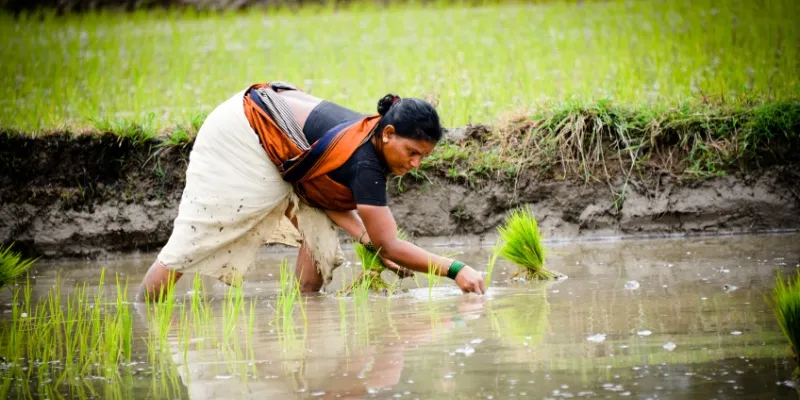
Like most great teachers, Professor MS Swaminathan offers the most profound lessons through his experiences. It is up to his students to learn from his mistakes and (attempt) not repeat them. A few decades ago, when I was still a rookie in the practice of development, he narrated an anecdote from the Green Revolution. He was in one of the north eastern states of India, introducing High Yielding Varieties of rice to cultivators. Since gender roles are fluid in most communities, men and women – young and old; as well as children had gathered and hung on to every word he said. Soon, there was time for questions. An old lady raised her hand. “You say I will get more rice,” she ventured, “but will I be able to brew my beer?” This was the (still young, now venerable) Professor’s wake-up call as he realised that the path to achieving food security was not without trampling on carefully preserved culture and heritage. Had it not been for that important consultation over half a century ago, we would not have succeeded in preserving the indigenous rice varieties of the North East.
It is this spirit and practice of consultation that has been ignored with the passing of the three farm bills in India in September this year. Not only has the bill been drafted without a demand from farmers, it has been passed without debate and deliberation (normally, bills with far reaching impacts are referred to a Select Committee for closer scrutiny before a debate in Parliament. This was not done). The bill was carried out by voice vote in the Rajya Sabha and the demand for voting ignored by the Chairman. The proceedings of Parliament were telecast and the ruckus that ensued was seen by all. The President still went ahead and (hastily) gave his assent to it, enacting it into law. Can such a bill be good? Can a bill impacting farmers but drafted without any input from those it impacts, really bring about reform? Can a bill that was legislated on a state subject without consultation come with good intent? Is any of this even constitutional?
Perhaps if we examine the provisions of the Bill, which is now an Act, the intent of the Central government might become clearer. The Bill introduces three reforms that facilitate private sector investment in agriculture. This means that corporates can now build infrastructure and strengthen agri-supply chains. Farmers who often struggle to sell their produce can now enter into contracts with these corporates and have an assured income. So far, so good. I have worked on a project in Maharashtra that facilitates exactly this linkage between the farmer and the private sector. Where does this get problematic?
Without explicitly stating so, these reforms have removed the safety nets that farmers previously enjoyed. Companies are not obliged to formalise contracts with farmers and can therefore renege or purchase at whatever price they see fit. There is no guarantee of a Minimum Support Price for the crops s/he produces unlike at the APMC (Agriculture Produce Market Committee). Then there is this clause that removes limits on stockpiling foodstuff, something that only farmers, farmer cooperatives, or farmer producer organisations could previously do and allows private players to do the same. So, after farmers sell to private companies, these commodities can be hoarded and the price manipulated by creating an artificial shortage. Is that fair? If that were not enough, disputes between farmer/s and private players have to be settled by a sub-divisional magistrate or a district magistrate – which is way beyond their reach. The APMC that previously provided a cover for farmers should their deals fall through, will wither away in the course of time as the private sector takes control. This will mean diminished revenue for the states, and a weakening of the federal fabric of India. With states losing out on yet another (remember GST) income stream, and a rather lucrative one at that, they will depend more and more on Central patronage for development.
Perhaps that is what troubles me most. India is her (diverse) states. India is her farmers. With the land bill already in play, these agricultural reforms will only serve to centralise authority, not to mention, leaving India’s vulnerable farmers at the mercy of corporates who can seize their holding and drive them to desperation and suicide (over 10,000 Indian farmers committed suicide in 2019). 60 percent of India’s population depends on agriculture for their livelihood. While the pandemic raged and India’s economy contracted, this was the only sector that recorded growth. Imagine if the fortunes of this sector too were to be linked to private sector companies?
As I type out this blog from Europe, watching farmers protest this takeover by capitalist forces by storming the capital, I am reminded of another peasant movement, several centuries ago, that changed the course of history. That movement also, stemmed from discontent over-centralisation and concentration of power. And peasants who were dismissed as coarse and insignificant, pulled off a revolution that made liberty sacrosanct. Maybe there is still time to give in to the farmers in India and draw up reforms that are bottom(s) up! There are some excellent thoughts on what needs to be done. The Swaminathan Committee Report is only one of the many recommendations. But then maybe, it is already too late.