Farm to Capital
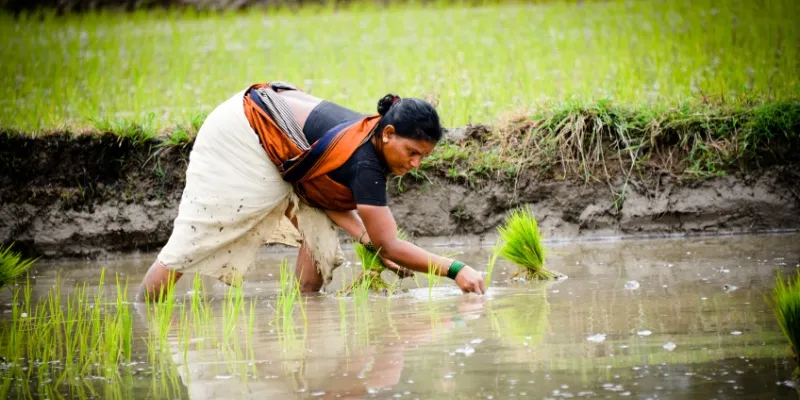
Like most great teachers, Professor MS Swaminathan offers the most profound lessons through his experiences. It is up to his students to learn from his mistakes and (attempt) not repeat them. A few decades ago, when I was still a rookie in the practice of development, he narrated an anecdote from the Green Revolution. He was in one of the north eastern states of India, introducing High Yielding Varieties of rice to cultivators. Since gender roles are fluid in most communities, men and women – young and old; as well as children had gathered and hung on to every word he said. Soon, there was time for questions. An old lady raised her hand. “You say I will get more rice,” she ventured, “but will I be able to brew my beer?” This was the (still young, now venerable) Professor’s wake-up call as he realised that the path to achieving food security was not without trampling on carefully preserved culture and heritage. Had it not been for that important consultation over half a century ago, we would not have succeeded in preserving the indigenous rice varieties of the North East.
It is this spirit and practice of consultation that has been ignored with the passing of the three farm bills in India in September this year. Not only has the bill been drafted without a demand from farmers, it has been passed without debate and deliberation (normally, bills with far reaching impacts are referred to a Select Committee for closer scrutiny before a debate in Parliament. This was not done). The bill was carried out by voice vote in the Rajya Sabha and the demand for voting ignored by the Chairman. The proceedings of Parliament were telecast and the ruckus that ensued was seen by all. The President still went ahead and (hastily) gave his assent to it, enacting it into law. Can such a bill be good? Can a bill impacting farmers but drafted without any input from those it impacts, really bring about reform? Can a bill that was legislated on a state subject without consultation come with good intent? Is any of this even constitutional?
Perhaps if we examine the provisions of the Bill, which is now an Act, the intent of the Central government might become clearer. The Bill introduces three reforms that facilitate private sector investment in agriculture. This means that corporates can now build infrastructure and strengthen agri-supply chains. Farmers who often struggle to sell their produce can now enter into contracts with these corporates and have an assured income. So far, so good. I have worked on a project in Maharashtra that facilitates exactly this linkage between the farmer and the private sector. Where does this get problematic?
Without explicitly stating so, these reforms have removed the safety nets that farmers previously enjoyed. Companies are not obliged to formalise contracts with farmers and can therefore renege or purchase at whatever price they see fit. There is no guarantee of a Minimum Support Price for the crops s/he produces unlike at the APMC (Agriculture Produce Market Committee). Then there is this clause that removes limits on stockpiling foodstuff, something that only farmers, farmer cooperatives, or farmer producer organisations could previously do and allows private players to do the same. So, after farmers sell to private companies, these commodities can be hoarded and the price manipulated by creating an artificial shortage. Is that fair? If that were not enough, disputes between farmer/s and private players have to be settled by a sub-divisional magistrate or a district magistrate – which is way beyond their reach. The APMC that previously provided a cover for farmers should their deals fall through, will wither away in the course of time as the private sector takes control. This will mean diminished revenue for the states, and a weakening of the federal fabric of India. With states losing out on yet another (remember GST) income stream, and a rather lucrative one at that, they will depend more and more on Central patronage for development.
Perhaps that is what troubles me most. India is her (diverse) states. India is her farmers. With the land bill already in play, these agricultural reforms will only serve to centralise authority, not to mention, leaving India’s vulnerable farmers at the mercy of corporates who can seize their holding and drive them to desperation and suicide (over 10,000 Indian farmers committed suicide in 2019). 60 percent of India’s population depends on agriculture for their livelihood. While the pandemic raged and India’s economy contracted, this was the only sector that recorded growth. Imagine if the fortunes of this sector too were to be linked to private sector companies?
As I type out this blog from Europe, watching farmers protest this takeover by capitalist forces by storming the capital, I am reminded of another peasant movement, several centuries ago, that changed the course of history. That movement also, stemmed from discontent over-centralisation and concentration of power. And peasants who were dismissed as coarse and insignificant, pulled off a revolution that made liberty sacrosanct. Maybe there is still time to give in to the farmers in India and draw up reforms that are bottom(s) up! There are some excellent thoughts on what needs to be done. The Swaminathan Committee Report is only one of the many recommendations. But then maybe, it is already too late.

The writer, and the other stuff.
Hello. I’m Gitanjali — development practitioner, sometime author, full-time mother, and very part-time golfer. I’ve spent the last two decades working across South Asia, West Africa, and bits of the world in between, mostly on polio eradication, regional integration, global health, and gender.
This site is a collection of essays I started writing during the pandemic and never quite stopped. Some are field notes. Some are rants. Some are about the strange things you notice on a video call when you’re on your thousandth one. They are written from Switzerland, where I now live with my husband and our daughter.
Writing is how I figure out what I actually think. I publish in case any of it is useful — or, at minimum, mildly entertaining — to you.
If you’d like to get in touch, you can find me through the usual channels. Otherwise, thank you for reading.