Opportunity?
In my last blog, I ranted about how my generation wasn’t quite keeping up and how we wanted to solve today’s problems using yesterday’s solutions, our eyes firmly shut as we live in denial about structural inequalities, offering cutesy cosmetic explanations when we are expected to be bold. To use an allegory, why should one spend enormous resources trying to prop up a tower destined for collapse instead of building one with solid foundations?
Yes, I haven’t ended my rant and I don’t think anyone is listening either…
Thing is, the pandemic isn’t over. Europe is in the throes of a terrible fifth wave (frankly, I stopped counting). And yet again, it is because of MY generation, eligible but unwilling to get vaccinated putting at risk young kids (like my daughter) who are still not eligible to be vaccinated. So yes, we continue to disappoint our kids and wreck their opportunity of making a success out of their future. Which, by the way, is what we did at COP26.
I didn’t really want to allude to COP26 that was already doomed to fail before it began, but we seem to shine at running our meagre opportunities to waste.
Which brings me to the title of this blog.
A few weeks ago, I visited Expo 2020 at Dubai. It was my first transcontinental trip in over 20 months so everything seemed new and exciting. I felt like a kid in a candy store browsing the entertainment offerings on Emirates and I spoke needlessly loud (with my headphones, naturally) when the air hostess came with food and drinks. So imagine how revved up I was when we arrived (on Dubai metro) at the Expo grounds. I nearly passed out when an army of orange robots came to greet us at the entrance. One of them even masqueraded as fashion police asking us to stay masked! All of that only heightened my expectations as we visited in the suggested sequence, the pavilions showcasing Mobility, Sustainability, Opportunity.
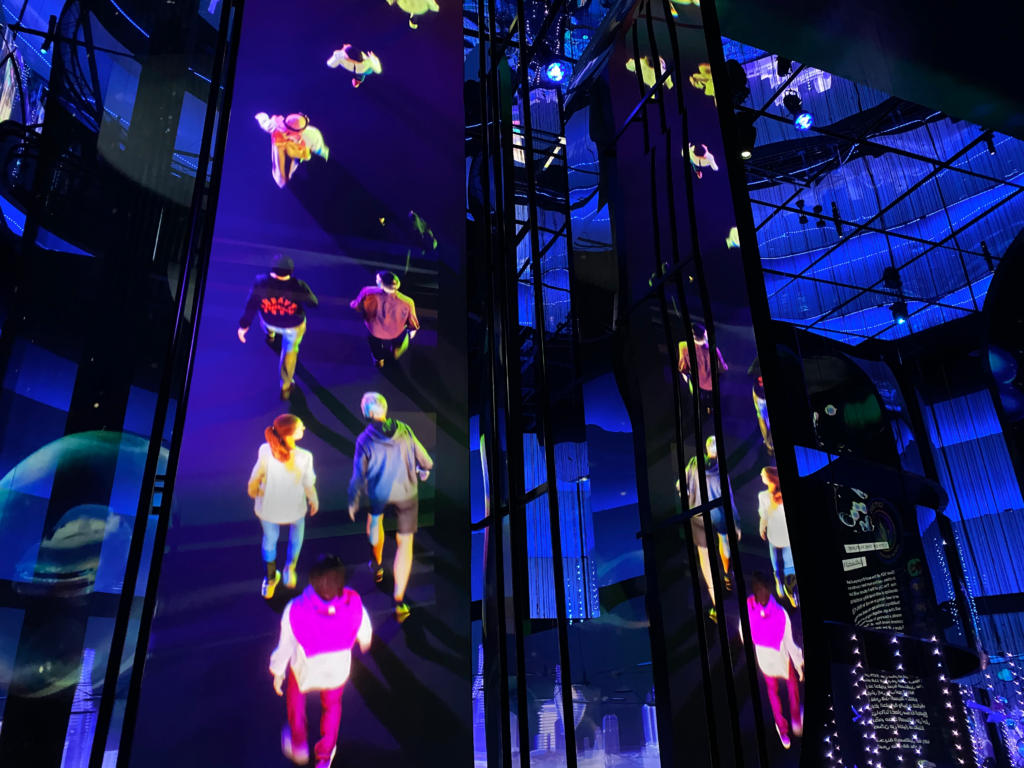
The first two pavilions, were fun, innovative, and futuristic. AI and psychedelia were big in both, harnessing intelligence to move populations through countries and for inter-galactic travel as well as building the future of a sustainable (neon blue and purple) planet. In fact, what impressed me about the sustainability part was that it laid bare the stark choices before us if we fail to act (now). For example, there were choices one could make between preserving a rainforest or cleaning up the ocean or between giving up meat entirely or not seeing a forest ever, and so on. Every choice you make, makes you realise how close we are to the point when there is no choice at all.
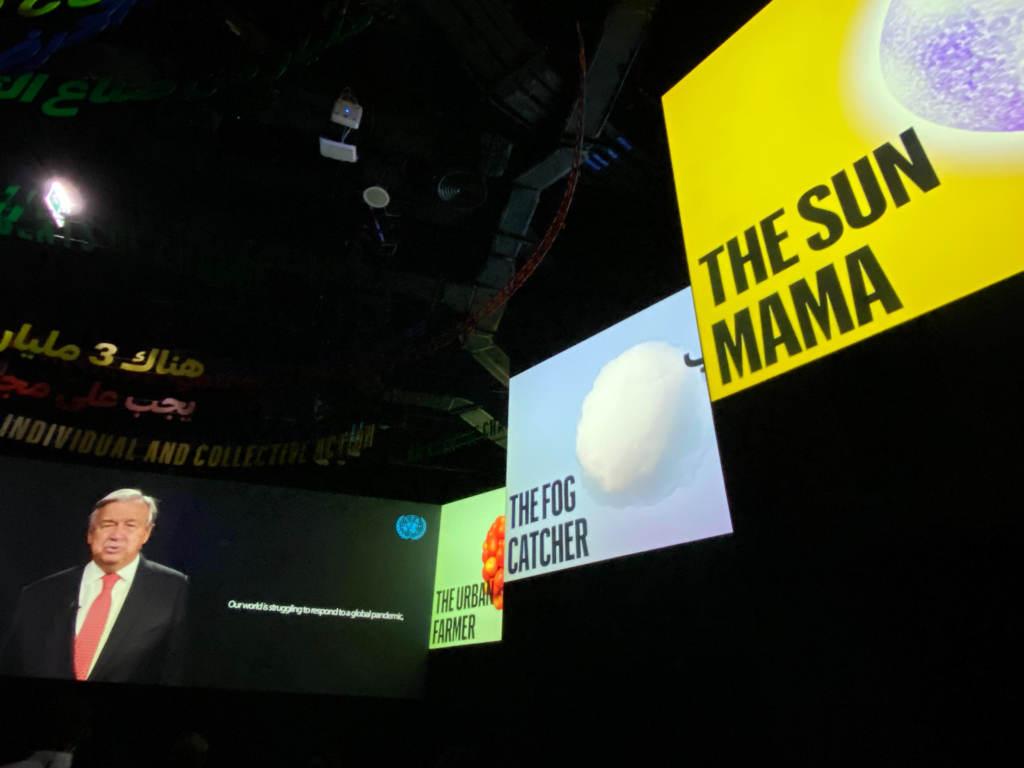
With that, we moved to Opportunity. This pavilion was curated by the UN so our expectations were a little low. It is easy to be hard on yourself when you have been part of a system…
We wound our way through a make believe serpentine (as there was no queue, just a serpentine pathway) and entered the halls to a speech by António Guterres where he talked about how there were so many opportunities for people to better their lives (I think) but they had carefully selected three that we were about to see.
Of the three lives, I picked The Sun Mama that follows a woman in Zanzibar who after training at the Barefoot College in Rajasthan (India) teaches women in her Governorate to harness solar energy. Women in remote rural areas go about installing solar panels and electrifying their homes and villages. They earn a steady income and their kids (especially girls) go to school and study late at night after helping their mothers with household chores. Some women also work (as tailors) and supplement family incomes. Transformational.
When I was typing the previous paragraph, I felt like the rookie UN JPO I was 20 years ago, preparing a brochure for a small-scale renewable energy project. And that is the problem with the previous paragraph and the Opportunity pavilion.
It is so last century.
If we are moving at such gobsmacking speed that our planet is a village and Mars the nearest suburb, how does an opportunity in solar electrification make kids in Zanzibar head to Planet B? (Not that I want them to). Social and economic inequalities scream so loud through those examples that one seriously worries that those who lead the UN are tone deaf and out of touch. Or, as always, they are far too scared to address the elephant in the room – that none of the SDGs address obscene levels of wealth that disproportionately snatch all opportunities for the rich. On that note, Elon Musk indulged his fancies through the security of a family-owned emerald mine and his fellow spaceman, Jeff Bezos had friends and family invest generously to make Amazon the success it became.
Thing is, the Dubai Expo could have just showcased opportunities for the haves and conned the audience into believing that the other half did not exist or (even better) just forced us to swallow the bitter pill that our opportunities are in fact determined by our wealth. But then the UN came along and curated a show that presents solutions that address JUST one facet of poverty. For centuries, the world has lived with and accepted deep structural inequalities that seem to only get exacerbated (despite the UN). And instead of boldly finding solutions that encourage populations to dream the same way as Elon Musk, it is more comforting to keep people where they are and offer them small doses of what we enjoy boundlessly: energy, mobility, wealth, information… keep propping up the faulty tower…
It is way more comforting to ignore poverty’s twin: inequality.
So, unless we address social and economic inequalities, there isn’t a single serious opportunity coming our way. About time we stopped believing in that fable.
Rant over. For now.
The writer, and the other stuff.
Hello. I’m Gitanjali — development practitioner, sometime author, full-time mother, and very part-time golfer. I’ve spent the last two decades working across South Asia, West Africa, and bits of the world in between, mostly on polio eradication, regional integration, global health, and gender.
This site is a collection of essays I started writing during the pandemic and never quite stopped. Some are field notes. Some are rants. Some are about the strange things you notice on a video call when you’re on your thousandth one. They are written from Switzerland, where I now live with my husband and our daughter.
Writing is how I figure out what I actually think. I publish in case any of it is useful — or, at minimum, mildly entertaining — to you.
If you’d like to get in touch, you can find me through the usual channels. Otherwise, thank you for reading.