Gender in Resilience

A few weeks ago (yes that’s how long it has been), I gave a talk on ways in which disaster management and recovery projects – and indeed all resilience efforts – can better integrate gender. Many of us in the development community struggle to incorporate meaningful gender actions while planning for resilience because they focus on the “disaster”. The trick is to think and plan for “normal” and take into consideration existing gender norms and intersectionality. For those grappling with mainstreaming gender in resilience initiatives and struggling to explain why the additional gender lens will make communities more secure and, in the event of a calamity, recover faster and better, here are my four top tips:
Focus on livelihoods: Many governments and communities have disaster preparedness and resilience right at the bottom of their priority. This is unsurprising because there is just so much they have to contend with – jobs, basic civic amenities, employment, livelihoods. Who has the bandwidth to focus on disaster preparedness? Even the COVID-19 pandemic has not really altered priorities. The focus is still on meeting daily needs. So as a practitioner or an organisation hoping to get resilience on the agenda: focus on livelihoods. Work with the community on a plan to enhance livelihoods (giving women a greater share in the economy), or identify alternative sources of livelihood and income (this too, can only be done if women participate because: will men do two jobs?). People get livelihoods, and the opportunity to earn more money and improve lifestyle is always attractive. Together with livelihoods, build on investments and financial literacy – these initiatives are universally relevant and help in introducing conversations around resilience and disaster preparedness.
Introduce life-saving skills: Since almost all development practitioners focus on skill-building, let’s look at introducing life-saving skills that stand in the face of a natural calamity. Build resilience by teaching communities (men, women, kids) to swim, climb (especially useful for mountain communities), drive, fix and repair machinery, such as generators and turbines, plumbing, first-aid… Women show more interest in acquiring these skills and having more people in the community competent in these skills enhances the community’s security overall. SwimSafe imparts swimming and water-related skills in Bangladesh, a country that experiences frequent cyclonic storms and is at increased risk of flooding as temperatures rise due to global warming. Ensure quality and standards when you introduce these critical life-saving skills. Have certified trainers impart these skills, encourage competition, provide certificates. Make sure that these skills are refreshed and utilised else they are soon forgotten.
Engage young people: If you can’t engage women directly, reach out to young people, especially young girls. Teach them self-defence (this is very popular) or identify a sport that appeals to them (racquet and football clubs are very popular in the Asian context). These skills help build strength and self-confidence and over time, they build ownership among older members of the community.
Fun fact: I employed this tactic to get my dad into yoga – he was initially hesitant, but my regular practice piqued his interest, and the rest is history.
Bring in the experts: All efforts at mainstreaming gender must include awareness and understanding of the risks of gender based violence and how these risks increase in the event of a natural or man-made disaster. Do not ignore this aspect while planning and preparing a resilient community. Help the community understand risks of trafficking, for example. Help women and children identify vulnerabilities and risks to their bodies. Help them identify predators. Identify existing triggers that may increase vulnerabilities (alcoholism, unemployment, large-scale male migration, indebtedness). And if you or your organisation cannot do this, bring in experts with knowledge and experience who can explain, train, and help shift behaviours.
In fact, whenever you are in doubt, do not hesitate to ask for help!
Good luck – may our communities always be resilient!
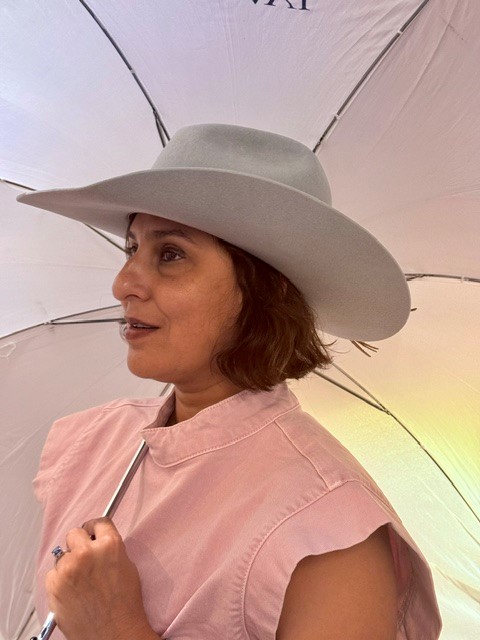
The writer, and the other stuff.
Hello. I’m Gitanjali — development practitioner, sometime author, full-time mother, and very part-time golfer. I’ve spent the last two decades working across South Asia, West Africa, and bits of the world in between, mostly on polio eradication, regional integration, global health, and gender.
This site is a collection of essays I started writing during the pandemic and never quite stopped. Some are field notes. Some are rants. Some are about the strange things you notice on a video call when you’re on your thousandth one. They are written from Switzerland, where I now live with my husband and our daughter.
Writing is how I figure out what I actually think. I publish in case any of it is useful — or, at minimum, mildly entertaining — to you.
If you’d like to get in touch, you can find me through the usual channels. Otherwise, thank you for reading.