The fault of our generation

Last week, I was invited to participate in a panel on Gender the Youth SDG Summit, UNITE2030. Totally up my street, I thought, as I scribbled my key messages: post 2030, its time for gender equality to be the norm… let’s broaden the narrow focus of gender in SDG 5 to include LGBTIAQ+… this, I can do in my sleep, I thought cockily. What else? Young people are incredible advocates and activists, but it is time to move from activism to influencing policy, so how about making that shift, being part of the democratic process and changing the system from within? Agitate to increase women’s representation in local bodies and parliaments if you want the laws you are proud of… All good messages, I thought as I tuned into the inaugural session.
We got started with a performance by AY Young – who was so supercharged that the inaugural panel of VERY senior executives (Henrietta Fore and David Nabarro, for example) had to keep the tempo up, somehow. I winced as I saw them struggle to un-shop their talk, un-jargon the development lingo and just tell it like it is. I saw the panel struggling to respond to very straightforward questions. There was no government to appease, no donor to persuade. I guess that is what made communication such a challenge. And then came the clincher of a question:
What is the one thing you’d tell your younger self to do or not do?
I thought of what I’d say if this were put to me. Probably not open my mouth and say the first thing that comes to my head… yes, definitely that…
I turned my attention to the Panel. “Be less afraid” said one, “take more risks,” said another. “You would have achieved more had you not been so afraid,” “don’t be too shy…” or “I was so unsure of how things would turn out…”
Fear and not taking risks is certainly not something I can relate to, but this made me realise the fault of my generation: collusion.
Every generation has a one-time opportunity to turn the tide in their favour; to determine the narrative that will shape the future. Just as we watch kids striking school unless leaders do more for the environment, ask the tough questions, and force us to act. We did nothing of the kind. We were not fully believing of the climate crisis and very iffy on gender, diversity, and inclusion. We thought fighting poverty and inequality was chasing a communist utopia. And so, we were easily blackmailed into sacrificing our intuition at the altar of consumerism. It is my generation that bought the fuel guzzling cars and holidayed in exotic locales. It was also my generation that regressed on gender and did little to make work and other public places safe. We lived in comfortable denial of caste, race, and we normalised discriminatory behaviour. We colluded with the generation before us and we missed our opportunity to make a difference and become real role models. We could have handed a much better planet to the youth.
And now we sit on panels and preach.
Little do we realise that we need to make way and listen. What did I learn from the youth? The top ten issues that concern them are around the environment, climate change, and sustainability. Gender, inclusion, LGBTIAQ+ come next. I didn’t hear much about jobs, but I think that’s because they don’t expect our generation to give them any. I also think they think we are far too jaded to provide anything more meaningful than the advice they won’t use. We should feel grateful they give us the floor in the first place.
They do respect institutions – which explains the SDG summit. And they believe in multilateralism in a more holistic, egalitarian way: as encompassing and allowing expression from the global south. There are no vaccine sceptics there and no proponents of war. They are committed to education, sport, and (lifelong) learning. They have female and trans role models. So what’s keeping them from shaping a better agenda? Us. And it’s time for that to change.
And so I told them that (like everything else) gender relations are all about sharing power. Power, that is so addictive that it is hard to concede…
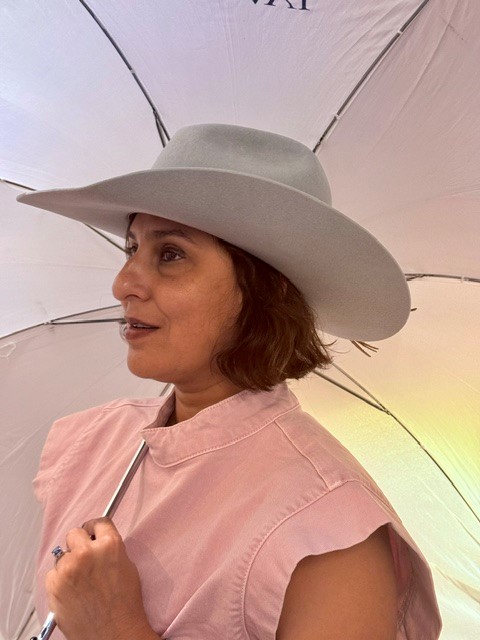
The writer, and the other stuff.
Hello. I’m Gitanjali — development practitioner, sometime author, full-time mother, and very part-time golfer. I’ve spent the last two decades working across South Asia, West Africa, and bits of the world in between, mostly on polio eradication, regional integration, global health, and gender.
This site is a collection of essays I started writing during the pandemic and never quite stopped. Some are field notes. Some are rants. Some are about the strange things you notice on a video call when you’re on your thousandth one. They are written from Switzerland, where I now live with my husband and our daughter.
Writing is how I figure out what I actually think. I publish in case any of it is useful — or, at minimum, mildly entertaining — to you.
If you’d like to get in touch, you can find me through the usual channels. Otherwise, thank you for reading.