Pandemic & the Poverty trap
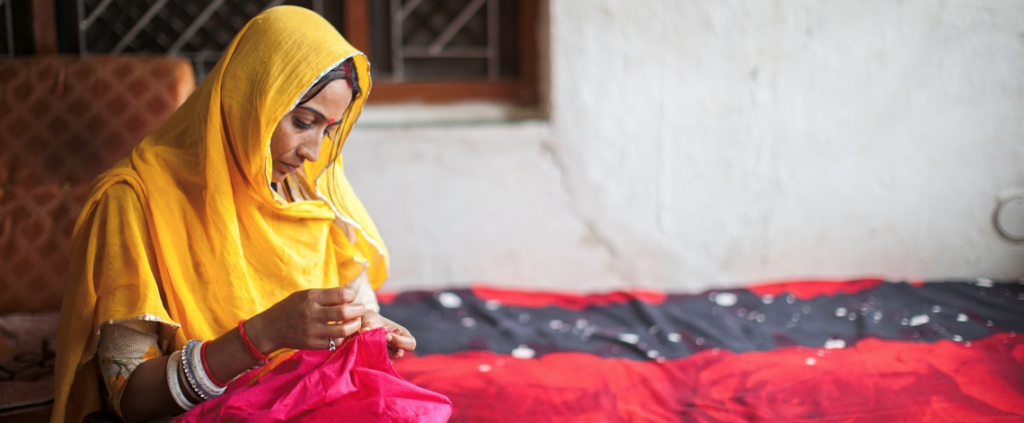
India holds the record for pulling the most number of people out of poverty in a single decade. The UNDP’s multidimensional poverty index of 2019 calculated that from 2005 until 2016/17, 271 million people had been lifted out of poverty in India. This stunning feat rested largely on targeted poverty eradication programmes in several low income states, many of them supported by the World Bank. All these programmes hinged on women’s self help groups that started out as a savings initiative to leverage institutional credit, transforming over time, into undertaking businesses at scale and forming producer companies.
Since 2003, I have observed groups in different Indian states, form, flop, dissolve, reconstitute, and revive. Only the fittest survived – often with state support. As governments changed, so did the names of the poverty alleviation projects. But in essence, the model remained unchanged. Success in rural areas resulted in many of these groups finding relevance in peri-urban and urban areas. While they have been instrumental in building financial stability in an otherwise precarious, mostly agricultural community susceptible to shocks, they have, more importantly, paved the way for women to participate actively in the economy and in local government. Women’s savings have in turn, resulted in girls staying longer in schools and aspiring to white collar jobs. Their savings have also, served as a safety net – paying for medical bills and family emergencies.
The COVID-19 pandemic has put all this progress – the war against multidimensional poverty, and women’s economic participation and resultant enhanced social status – in jeopardy.
Globally, women started losing jobs in the early days of the pandemic. India has been registering a decline in female labour force participation since 2005, presents an especially worrying picture. With only 20 percent of women employed, their share of job losses according to surveys is estimated to be 23 percent. This report by McKinsey has estimated that female job losses are 1.8 times higher than male jobs globally, at 5.7 percent versus 3.1 percent respectively.
Indeed, micro-surveys such as those by the Institute of Social Studies Trust in Delhi and Yuva in the Mumbai Metropolitan Region reveal nearly 100 percent loss of income by domestic workers, street vendors, waste pickers, and even sanitation workers at a time when hygiene standards need to be scrupulously maintained. Yuva’s surveys have exposed inefficiencies in distribution of unemployment benefits to “unregistered” construction workers and those on daily wage employment. But perhaps what comes out even more starkly, is what we already know: women’s share of unpaid domestic care work has more than doubled.
Other disturbing consequences include increased indebtedness, inability to repay loans and rents. Women headed households risk becoming homeless and destitute.
The decline of formal sector jobs is attributed to women disproportionately dominating industries that have been impacted by COVID-19. These include: travel and tourism, hospitality, retail, administration, accommodation and food services, theatre, performing arts and the like. With work from home becoming the norm, the expectation that women would move into that space seamlessly because of their experience and innate ability to balance life and work from home has been belied. Now that men are also forced to work from home, the internet is flooded with rulebooks like this on how to make it more productive. Never mind that women have lobbied hard for empathy and flexibility to manage childcare obligations.
What can we do to ensure that women don’t lose jobs during the pandemic? To me, the solutions are straightforward.
First, share household chores and child care responsibilities.
Second, ensure that an employed woman has digital access and space for remote work.
Third, and I can’t stress this enough – if you employ domestic help, please, please pay them. Buy them insurance, it doesn’t cost much.
Fourth, support local businesses – these are built on the backs of women and support the education of several young girls.
And finally, we must understand that a woman in a job, with an income, is an asset to all. Losing one’s job in the midst of a crisis is the first step towards slipping into poverty – a battle that is not easily won.

The writer, and the other stuff.
Hello. I’m Gitanjali — development practitioner, sometime author, full-time mother, and very part-time golfer. I’ve spent the last two decades working across South Asia, West Africa, and bits of the world in between, mostly on polio eradication, regional integration, global health, and gender.
This site is a collection of essays I started writing during the pandemic and never quite stopped. Some are field notes. Some are rants. Some are about the strange things you notice on a video call when you’re on your thousandth one. They are written from Switzerland, where I now live with my husband and our daughter.
Writing is how I figure out what I actually think. I publish in case any of it is useful — or, at minimum, mildly entertaining — to you.
If you’d like to get in touch, you can find me through the usual channels. Otherwise, thank you for reading.
One Comment
Pingback: